But you don’t have to face it without a clear plan. From our first conversation you will know what happens next, when it will happen, and who will be by your side. My role is to guide you through each decision with speed, precision and compassion, so you can focus on living your life.
Your cancer care pathway with James

A cancer diagnosis changes everything — but you don’t have to face it without a clear plan.
A cancer diagnosis changes everything
I specialise in gastrointestinal oncology. This includes cancers of the colon and rectum, pancreas, liver (hepatocellular carcinoma, HCC) and bile ducts (cholangiocarcinoma), small bowel and anal canal. I provide chemotherapy, immunotherapy and radiotherapy as part of coordinated care pathways with leading surgeons. Together we ensure fast, consultant-led access to safe, cutting-edge treatment.
I have pioneered MRI-guided radiotherapy for pancreatic and liver cancer, and have nationally leading expertise in stereotactic radiotherapy (also called SABR/SBRT) for secondary cancer in the liver, lung, lymph nodes, bone, spine and adrenal. I have extensive experience of treating people with lung, breast, prostate, gynaecological and other cancers, often working with their NHS treatment team to provide coordinated care.
Step-by-step

Step 1
An initial consultation, without delay
By using your private medical insurance, or by choosing to self-fund your care, you can be seen within days, in person or via secure online video. Before we meet my office gathers your records and scans so that nothing is missed. During the consultation we review your medical history and all investigations.
I explain your diagnosis in plain English, outline options, and answer every question. Whether you have a new cancer diagnosis or are seeking a second opinion, I can arrange any additional tests promptly, so you are not left waiting or worrying. You will receive a clear, written plan, realistic timelines, and direct contact routes to my team.
Step 2
Multidisciplinary planning
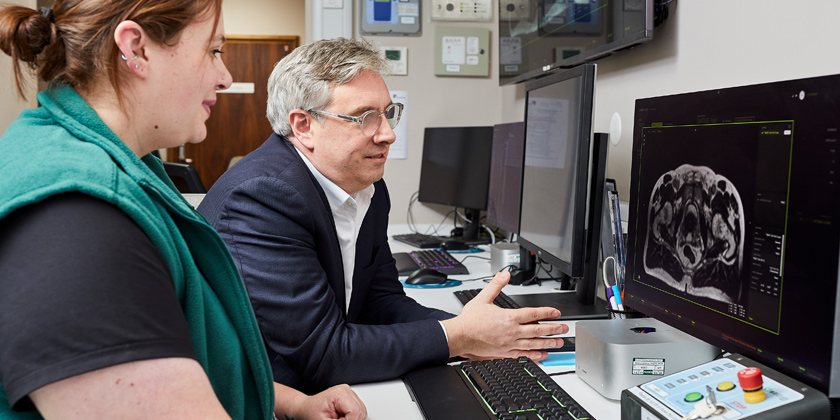
Your case is reviewed by one of the most experienced multidisciplinary teams (MDTs) in Europe. This might include expert colorectal and hepatopancreatobiliary (HPB) surgeons, radiologists, nuclear medicine physicians, pathologists, specialist nurses and other oncologists, depending on your needs.
Every recommendation reflects the latest evidence and the hands-on experience of specialists who treat cases like yours every day. If your situation would benefit from additional opinions, I draw on a trusted professional network across the UK, Europe and the US.
Step 3
Personalised treatment plan
There is no one-size-fits-all in cancer treatment. Your plan is built around:
- Cancer type and stage (including exact tumour site, biology and genetic profile)
- Overall health and lifestyle, including fitness for treatment and recovery
- Your goals—whether cure, longterm control, or comfort
We cover the ‘why’ behind each step: surgery, systemic therapy (chemotherapy, targeted therapy, immunotherapy), radiotherapy and, when appropriate, stereotactic ablative radiotherapy (SABR/SBRT). We explain when local therapies to liver or lung metastases (surgery, ablation or SABR) may convert limited spread into a treatable state with durable control. Alongside core treatment, we provide evidence-based lifestyle counselling—nutrition, exercise, smoking cessation, sensible alcohol limits, sleep and stress support. Open-minded but pragmatic advice is provided about supplements and alternative remedies. If you need an episode of private care alongside NHS treatment, I liaise closely with your usual team so your pathway remains joined-up and safe.
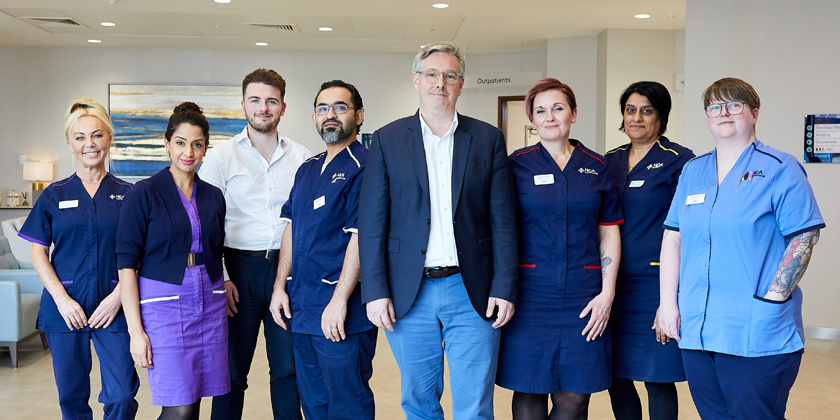
Those who need surgery typically have this at HCA Harborne Hospital in Edgbaston, which has the latest Da Vinci robotic surgical systems, a fully staffed intensive care unit, and comfortable single rooms. It also has a chemotherapy day unit offering the full range of drug treatments for cancer, as well as radiotherapy. For those wanting treatment closer to home, I also offer chemotherapy and immunotherapy at Spire Little Aston and Spire Parkway, and at GenesisCare Oxford.
Stereotactic radiotherapy (SABR/SBRT)
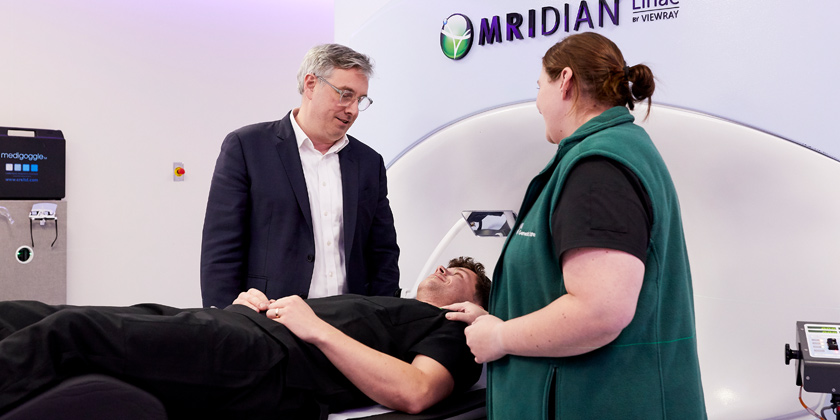
SABR is a highly precise, entirely non-invasive form of radiotherapy that delivers very high doses in a small number of treatments (often 1–5 sessions) to eradicate tumours while sparing normal tissues. It is especially useful when there are a few (typically 1–5) metastases. I offer this treatment across the GenesisCare network, which includes advanced treatment centres in Oxford, Birmingham, Bristol, Cambridge, Chelmsford, Guildford, Nottingham and central London. I have access to MR-linac technology in Oxford, Guildford and London and to CyberKnife technology in Birmingham, and will advise you on the approach that’s best suited to your needs
Step 4
Treatment begins at the earliest opportunity
Once we agree the plan, things can move quickly. My team coordinates chemotherapy, immunotherapy, radiotherapy/SABR and surgery in the right sequence, with no unnecessary waiting. Appointments, scans and procedures are booked promptly, and we provide clear preparation guidance—what to bring, how long visits take, and who to contact.
For SABR, we explain each step so you know exactly what to expect, and for chemotherapy, we explain out-of-hours support procedures and how to ask for help if you need it. Throughout treatment, you have named contacts and proactive checkins so you always know what is happening next.
Step 5
Ongoing support and adjustment
Your progress is reviewed regularly, with scan and blood test checkpoints at meaningful intervals. If results suggest a change would help, we adapt quickly—for example, adjusting chemotherapy doses, switching schedules, adding SABR, or sequencing surgery and radiotherapy differently to keep you on the safest, most effective path. Side effects are managed early and actively, with practical measures you can use at home, and rapid access to clinic review when needed. Between appointments, you can contact my team directly so questions are answered and concerns addressed without delay.

Step 6
Thriving once treatment is complete
When your treatment finishes, we continue your care with a survivorship plan tailored to your cancer. For GI cancers this may include tumour marker monitoring (e.g., CEA, CA199 or AFP as appropriate), scheduled CT/MRI, and endoscopy or colonoscopy at agreed intervals. After SABR, we use planned imaging to track expected treatment changes. After chemotherapy we help you navigate recovery, supporting return to work and activity, and reinforcing lifestyle steps that support longterm health.
If your ongoing care returns to the NHS, I provide a comprehensive report and remain available to your usual team for advice as needed, so your followup stays coherent and clear.
Why this works
Speed: Rapid access to consultations, investigations and treatment within days, reducing uncertainty and improving outcomes.
Integration: Seamless coordination across specialties, with additional dietetic and physiotherapy input where helpful, so that you don’t have to worry about coordinating different consultants.
Precision: Plans tailored to tumour type, stage and your goals, based on the latest evidence, and explained to you with clarity and compassion.
Adaptability: We adjust quickly when your needs change, based on what your scans and bloods show.
Support: You have named contacts and clear information at every step—no unanswered questions, no drifting timelines.
What my patients say
"James is a pleasure to work with. I've received a level of care and understanding that I hadn't received before with other oncologists. His ability to listen and come up with a plan that considers my holistic needs, not just the medical ones, without compromising the treatment of the disease, is second to none."
"I found Dr James Good to be a warm, caring, professional man. He delivered sensitive information in an empathetic way. I really feel, despite an awful diagnosis of inoperable pancreatic cancer, he has my best interests at heart and was willing to leave no stone unturned to help me. He was always quick to communicate with me directly, and very down to earth. He made me feel like I was a person and not a statistic."
Frequently asked questions
I specialise in comprehensive treatment for all cancers of the colon, rectum, pancreas, liver and bile ducts, and anal canal. I also have extensive experience of treating all forms of secondary cancer (including lung, breast, prostate and others) with stereotactic radiotherapy, wherever it is in the body.
Oligometastatic usually means a small number of secondary tumours – typically up to five, but sometimes more. SABR can eradicate secondary tumours, either alone or as part of a combined approach with surgery. Suitability depends on number, size, location, overall health and control of disease elsewhere.
No. Many patients contact my office directly. We provide a secure portal to upload clinic letters and scan reports, and we’ll help gather anything missing so you do not lose momentum. A formal referral isn’t required to book a consultation.
Yes. I work with all major UK private medical insurers and also see self‑funding patients. My team handles authorisation and provides clear cost estimates from the outset.
No. Private and NHS pathways are separate, and private care does not alter NHS waiting lists. Many people choose private treatment to start treatment sooner or explore options that aren’t available on the NHS. If care transitions back to the NHS after treatment, I ensure full handover so your plan remains coordinated.