A proactive, innovative and realistic approach

A diagnosis of pancreatic cancer marks a turning point in anyone’s life, but treatments are improving, outcomes are better when care is coordinated by experienced teams, and new technologies — especially in radiotherapy — are changing what’s possible. I will guide you through this, giving you rapid access to an expert multidisciplinary team and a clear plan for cutting edge pancreatic cancer treatment.

As one of the most experienced pancreatic cancer teams in Europe, my colleagues and I combine drug treatment, advanced forms of radiotherapy, surgery, and comprehensive supportive care to give you the best possible outcome. Whether the aim is long term remission, disease control, or quality of life, we will always do our best for you, and give you a clear idea of what to expect.

What is pancreatic cancer?

The pancreas sits just behind the stomach and is closely connected to the bile duct, which connects the liver to the small bowel. It produces digestive juices that break down food, as well as hormones like insulin that control blood sugar. Pancreatic cancer develops when some of the cells in the pancreas start to grow in an uncontrolled way. Most cases are down to factors such as aging, smoking, diabetes and obesity, but genetic changes and family history can also play a role. Chronic pancreatitis, where long-term inflammation makes it easier for abnormal cancer cells to develop, can also contribute to risk.

One of the things that makes pancreatic cancer difficult to treat is the way the tumour interacts with the tissue around it. Instead of forming a soft lump, it often triggers the body to lay down dense scar-like tissue around the tumour. We call this a desmoplastic reaction, and it can act as a barrier by reducing blood supply and making it harder for chemotherapy drugs to penetrate and work effectively.

The cancer cells themselves have a tendency to invade nearby nerves and blood vessels, which is why surgery is often challenging. They also tend to spread quite quickly to the liver or the lining of the abdomen (peritoneum). Understanding these features has led to new treatments — such as more intensive chemotherapy combinations and highly targeted radiotherapy — designed to overcome these barriers.

Types of pancreatic cancer

Pancreatic ductal adenocarcinoma (the most common)

What it is
Arises from the exocrine cells of the pancreas, which normally make digestive juices.

How it usually behaves
Accounts for around 90% of cases. Tends to grow quickly and spread early to nearby lymph nodes, vessels, and liver. This is the type most people mean when they say ‘pancreatic cancer.’

Neuroendocrine tumours (NETs)

What it is
Develop from the hormone-producing (endocrine) cells of the pancreas.

How it usually behaves
Can behave very differently — some are slow-growing and may cause symptoms from hormone overproduction, while others are more aggressive.

Cystic tumours (e.g. IPMN, mucinous cystic neoplasm)

What it is
Growths that form fluid-filled sacs in the pancreas.

How it usually behaves
Some are benign, others can turn malignant over time. Often found on scans before causing symptoms and may be removed to prevent progression.

Rare exocrine tumours (e.g. acinar cell carcinoma, pancreatoblastoma)

What it is
Arise from other exocrine cells that make digestive enzymes.

How it usually behaves
Much less common; can behave aggressively but treatment approaches are tailored individually.

How does pancreatic cancer cause illness?

Although it begins in the pancreas, pancreatic cancer is best understood as a systemic illness. This means it often affects the whole body, not just the pancreas itself. Even when the tumour is still localised and has not spread, it can release chemical signals that disrupt normal body functions. This can lead to cancer cachexia, a syndrome of weight loss, muscle wasting, and fatigue that is out of proportion to food intake. Cachexia often can’t be reversed with diet alone, but recognising it early is important. Specialist support with nutrition, enzyme replacement, exercise, and medication can help you maintain strength, improve energy, and cope better with treatment.

Other systemic effects include changes in blood sugar, blood clotting, and immune function. These features are part of why pancreatic cancer feels so exhausting, and why treatment needs to address not just the cancer but also your overall wellbeing. By recognising and managing these systemic effects early, we can often help patients feel stronger and better able to tolerate treatment.

Symptoms and diagnostic pathway

Pancreatic tumours are often diagnosed only after they have caused symptoms. Common warning signs include:

  • Pain in the upper abdomen that pushes through to the back.
  • Yellowing of the skin or eyes (jaundice) through blockage of the bile duct.
  • Unexplained weight loss or loss of appetite.
  • Fatigue.
  • Digestive problems or new-onset diabetes.

Diagnosis usually involves:

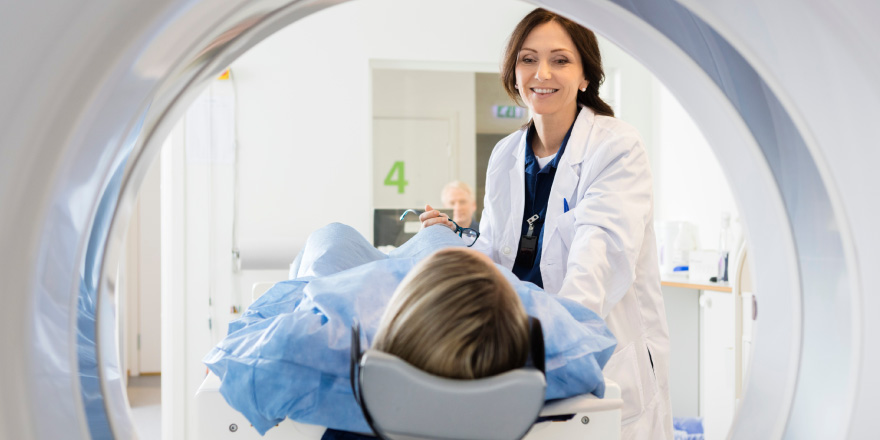
  • CT, MRI and PET scans to assess the pancreas and surrounding organs.
  • Endoscopic ultrasound biopsy to confirm the diagnosis.
  • Blood tests, including CA19-9, a tumour marker.
  • Molecular profiling to identify targeted treatment options.

We arrange investigations rapidly and review results without delay.

James Good - Chemotherapy treatment

Treatment options for pancreatic cancer

Initial decision-making usually focuses on whether surgery is possible now, or might be possible at some point in the future.

  • Operable (resectable): the tumour is confined to the pancreas and can be removed safely with surgery. Someone with other significant health issues such as cardiovascular disease might be described as ‘medically inoperable’, meaning the tumour is technically resectable but the operation would be too much for their body to take.
  • Borderline resectable: the tumour is close to important blood vessels. Chemotherapy, with or without radiotherapy, are often given first to shrink it, increasing the chance of a successful operation.
  • Locally advanced: the tumour involves major vessels or surrounding structures, making surgery difficult or impossible, but hasn’t spread to other organs. Treatment focuses on chemotherapy and advanced radiotherapy (such as MRI-guided sterotactic radiotherapy) to control growth and manage symptoms. Sometimes, locally advanced cancer becomes operable after chemotherapy and radiotherapy.
  • Metastatic: the cancer has spread to other organs, most commonly the liver, lungs and peritoneum. Chemotherapy is the main treatment, with radiotherapy used for symptom control. High-dose targeted radiation can also be used in patients with more limited spread.

The exact treatment plan depends on a variety of factors, including the type and stage of cancer, your medical history and fitness for treatment, and your treatment goals.

Surgery

This remains the only treatment that gives a chance of long-term cure. The type of operation depends on where the tumour is located. If it’s in the head of the pancreas, the most common procedure is a Whipple operation (also called pancreaticoduodenectomy), which removes part of the pancreas along with part of the small intestine, bile duct, and sometimes part of the stomach. Tumours in the body or tail of the pancreas are usually treated with a distal pancreatectomy, often combined with removal of the spleen. These are major operations that require a high level of surgical skill, expert post-operative care, and clear communication about the long-term impact on quality-of-life. Outcomes are significantly better when surgery is performed in a specialist centre as part of a multidisciplinary team, where surgeons and oncologists work closely together. This is exactly what we offer.

Chemotherapy

Chemotherapy can be given before surgery (neoadjuvant), after surgery (adjuvant), or as the main treatment for advanced disease. Common regimens include mFOLFIRINOX and gemcitabine / nab-paclitaxel. Chemotherapy helps shrink tumours, eliminate microscopic cancer cells, and improve life expectancy.

Radiotherapy – often overlooked, but potentially transformative

Radiotherapy plays an increasingly important role in pancreatic cancer:

  • Borderline resectable disease: Chemoradiation can shrink the tumour, improving the chance of successful surgery.
  • Locally advanced disease: Stereotactic ablative radiotherapy (SABR) delivers high-dose, highly targeted treatment. This can stabilise tumour growth, relieve symptoms, and in some cases make surgery possible.
  • Oligometastatic disease: SABR can target a small number of metastases in the liver or lungs, used alongside chemotherapy.
  • Palliative radiotherapy: Precisely delivered doses can relieve pain, bleeding, or obstruction, improving quality of life.

The most effective radiotherapy for pancreatic cancer

I am an internationally leading expert in using MRI-guided SABR for pancreatic cancer. This innovative treatment combines highly focused beams of radiation with real-time MRI imaging, so we can see the tumour and surrounding organs as we treat. I have pioneered this technique in the UK at GenesisCare’s centres in Oxford, London and Guildford, and continue to lead research and development. It can be used to treat both the pancreatic tumour and some secondary tumours, so a key question for everyone who has pancreatic cancer is: can this approach help me?

Immunotherapy and vaccines

Researchers are actively exploring the use of vaccines as a treatment for pancreatic cancer. They are designed to stimulate the body’s immune response against the tumour by ‘teaching’ the immune system to be recognise and attack an abnormal cancer cell. The focus is mainly on mutations in the RAS gene, which are present in most pancreatic cancers. The vaccine aims to trigger T-cells and other immune cells to hunt down and destroy RAS-mutated cancer cells. For example, the ELI-002 vaccine has been able to generate strong immune responses. It may reduce the risk of pancreatic cancer recurrence after surgery and chemotherapy. Although it is not yet standard treatment, it is one of the most exciting areas of research in pancreatic cancer today — offering hope that vaccines could one day become part of routine care.

Immunotherapy also uses the body’s own immune system to fight cancer. It is not yet effective for most people because the tumour’s environment creates strong barriers that stop immune cells from attacking the cancer cells. However, there are important exceptions. In a small group of patients whose tumours have changes in DNA repair — called microsatellite instability (MSI-high) or mismatch repair (MMR) deficiency — immunotherapy drugs known as checkpoint inhibitors can unleash T-cells to attack the cancer, sometimes with long-lasting responses. Clinical trials are also testing combinations of immunotherapy with chemotherapy, radiotherapy, and vaccines to make the immune response more effective in pancreatic cancer. While not yet routine for all patients, immunotherapy represents a growing and hopeful area of research.

Supportive and holistic care

For people living with pancreatic cancer, how the body is supported during treatment can make a real difference to outcomes and quality of life. Integrating diet, exercise, and metabolic health into care isn’t an optional extra — it helps the treatment work better and reduces complications. A balanced diet provides the protein, vitamins, and calories needed to tolerate chemotherapy and repair tissues, while also helping to prevent weight loss and frailty. Regular physical activity, even something as simple as walking, improves strength, mood, and immunity, and reduces the risk of blood clots and infections. Paying attention to metabolic health — keeping blood sugar, weight, and cardiovascular fitness in check — lowers inflammation and improves how the body handles both cancer and its treatment. Put together, these lifestyle measures give you the best possible chance to live longer and feel stronger.

The team I work with will help you with:

  • Nutrition: comprehensive dietary advice, iron and vitamin support, and enzyme replacement if needed.
  • Symptom control: management of anaemia, bowel function, nausea, pain relief.
  • Psychological support: this is available from a specialist nurse or psychologist for patients and families coping with anger, fear and uncertainty.
  • Lifestyle: evidence-based guidance on exercise, sleep, and supplements to support wellbeing.

Why choose private treatment with me?

Private treatment for pancreatic cancer is safe, innovative, and convenient:

  • Fast access: an initial consultation or second opinion within a week, and a prompt start to treatment.
  • Expertise: access to one of the most experienced MDTs in Europe for pancreatic cancer.
  • Integration: our ability to consider every possible option means I can offer you a coordinated plan for care close-to-home.
  • Innovation: access to molecular profiling and world-leading expertise in MRI-guided radiotherapy.
  • Continuity: you remain under my care throughout, with direct communication and support.
  • Safety and quality: I only offer treatment at private hospitals where I would have treatment myself, which means a focus on keeping you safe and supported throughout your treatment.

This combination of rapid access, advanced technology, and personalised support sets us apart.

Your treatment pathway

Step 1

Initial consultation

We review your medical history, scans, and biopsy results. I explain your options in plain, jargon-free language, outline the pros and cons of each route, and recommend the best course of action for you. If you need additional tests for clarity, we arrange them quickly.

Step 2

Multidisciplinary review

Your case is discussed by our expert MDT. This ensures your plan reflects current best practice, considers every possible treatment option, and is tailored to your exact situation, fitness, and goals.

Step 3

Personalised plan

We map out your treatment timeline—whether that’s surgery, radiotherapy, chemotherapy, or a combination. You’ll receive clear written information about appointments, preparation, and how to reach us if you have questions.

Step 4

Treatment begins

You start treatment promptly. My team support you throughout, monitoring progress, managing side effects, and keeping communication open and proactive. You will know exactly who to contact and when.

Step 5

Monitoring and adaptation

We arrange regular scans and blood tests to track progress, and we meet either face-to-face or via a secure online video platform before every treatment session. Plans are adapted quickly if change is needed. Symptom control, nutrition, psychological and family support are built into your care.

What my patients say

I am proud to be rated highly by people I’ve treated. One patient with pancreatic cancer wrote:

Frequently Asked Questions

Sometimes. If the tumour is localised, surgery is successful and a full course of chemotherapy can be delivered, long term survival is possible. Sadly many people who have surgery do go on to relapse, but that’s not a reason to be pessimistic. I will always balance hope with realism in what is undoubtedly an emotionally challenging situation for many people and families affected.

Not necessarily. Pancreatic cancer is a serious illness, but how things work out varies widely depending on tumour stage, overall health, and how you respond to treatment. Surgery, chemotherapy, and advanced radiotherapy such as MRI-guided SABR are improving survival and quality of life. We look at every appropriate treatment to give you the best possible outcome.

This is the question many patients want to ask but hesitate to. The answer is that it depends — on stage, the biology of the tumour, and how well you respond to treatment. Some people live months, others several years. Rather than fixating on numbers, we focus on what we can do to extend life and help you live well, aiming for meaningful milestones that matter to you.

Treatment is always tailored to you. We balance effectiveness with quality of life, so you can stay as strong and active as possible. Many patients are surprised at how well they tolerate modern treatments. If you decide against active treatment, we would still provide full support with symptom control, nutrition, and palliative care. You won’t be left alone — our focus would shift to comfort and quality of life.

Pain is a common worry. The good news is that pain can usually be well controlled with modern approaches: medication, nerve blocks, and radiotherapy to the tumour or metastases. My palliative care colleagues are highly skilled in ensuring you stay comfortable.

Absolutely. Radiotherapy can achieve high rates of tumour control, both of the tumour in the pancreas and of secondary tumours in the liver, node, bone and lung. This can translate into living longer, or maintaining quality of life for longer, depending on the scenario. It’s always worth asking about whether radiotherapy will help.

Yes, I’m involved in research programmes looking at improving pancreas cancer treatment.

Ready to move forward?

If you’ve been diagnosed with cancer, the most important step is to act promptly. Rapid, expert care leads to better outcomes and less worry. Contact my office today to arrange an appointment. We’ll review your case, agree a plan, and begin your journey to recovery together.

"*" indicates required fields

Privacy*