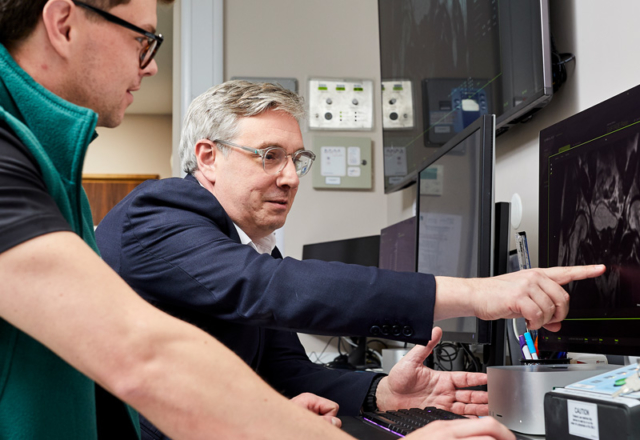
Advanced pancreatic cancer can be a difficult disease, both because of where the pancreas sits — deep in the abdomen, surrounded by the stomach, bowel, liver and major blood vessels — and because many tumours are discovered at a stage where upfront surgery is not possible. Nevertheless, there are grounds for the cautious optimism that pancreatic cancer patients deserve, because treatments are improving all the time. One of the most important advances is MRI-guided SABR (stereotactic ablative radiotherapy): a highly precise, non-invasive treatment that uses real-time MRI imaging to target pancreatic tumours with millimetre accuracy.
SABR is transforming what is possible for people with every stage of pancreatic adenocarcinoma. It gives high rates of tumour control combined with excellent tolerability and the potential to extend life expectancy while preserving quality of life. At GenesisCare, the MRI-guided SABR service that I lead delivers this treatment using state-of-the-art MR-linac technology, allowing us to adapt the treatment each day and safely achieve higher doses than previously possible.
For patients with metastatic pancreatic cancer that has spread to other organs, SABR can also be useful treatment option. If there are up to five secondary tumours, carefully targeted ablative doses of radiation can often be used to eradicate them all. Whilst this isn’t a curative treatment, it can prolong the amount of time it takes for the cancer to get worse overall (what we call ‘disease progression’), and can also give a break from chemotherapy, which improves quality of life.